Regulatory Reporting Transformation
Overview
Regulatory reporting has traditionally been viewed by banks as a necessary but resource-intensive compliance exercise. However, with the introduction of Basel 3.1 and the UK’s Simplified Capital Regime, firms are now presented with a timely opportunity to re-think their approach. Rather than treating regulatory change as a constraint, firms can instead use it as a catalyst for a broader transformation that drives improvements in governance, data quality, systems, and overall operational efficiency.
Current Challenges in Regulatory Reporting
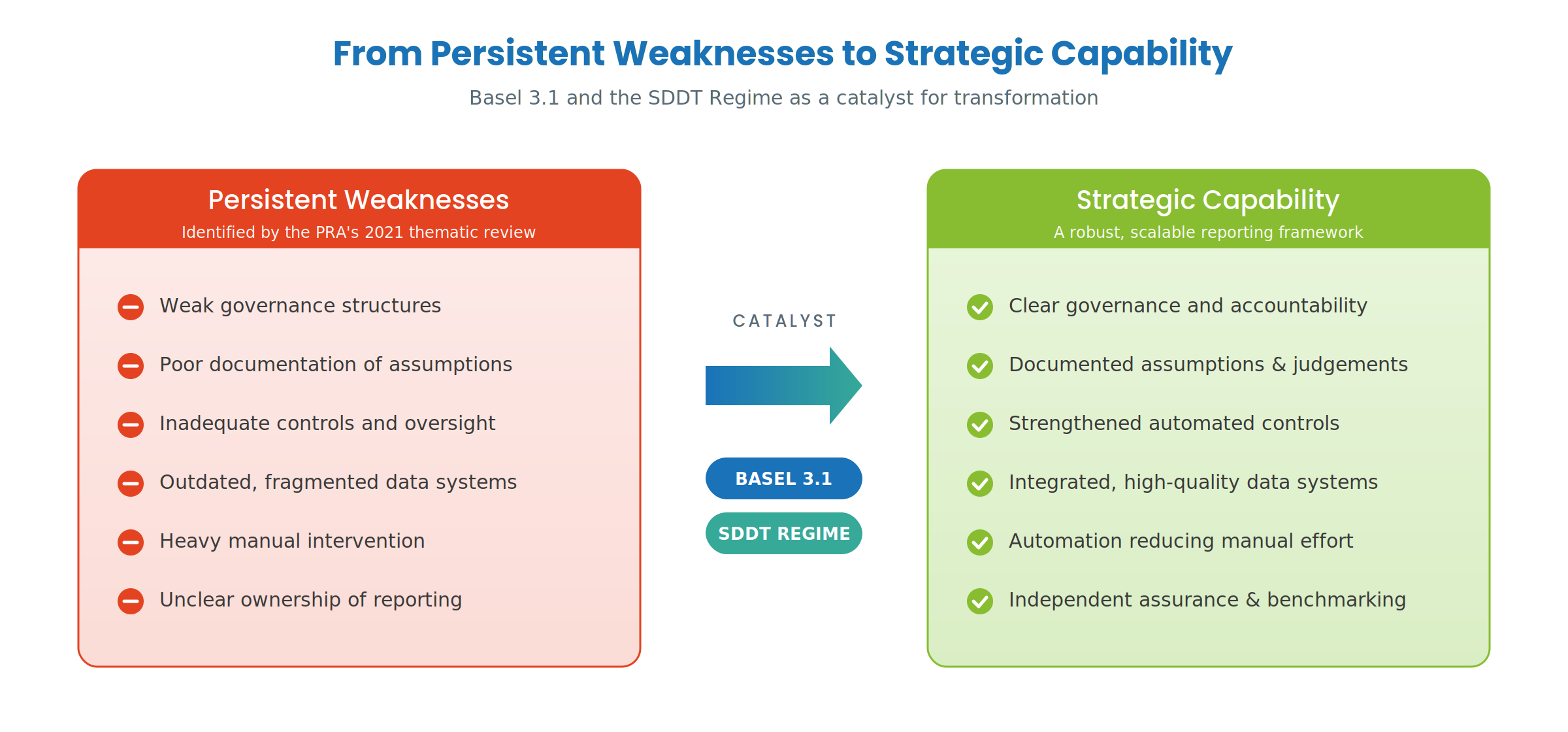
The Prudential Regulation Authority (PRA) has highlighted persistent weaknesses in regulatory reporting frameworks across the industry. Its 2021 thematic review identified recurring issues, including weak governance structures, poor documentation of key assumptions and interpretations, inadequate controls, and outdated data systems. These shortcomings often lead to errors, inefficiencies, and reduced confidence in reported outputs.
In many firms, regulatory reporting processes remain overly reliant on manual intervention, fragmented systems, and inconsistent practices. Documentation is frequently incomplete or outdated, and ownership of reporting responsibilities is not always clearly defined. As a result, banks can struggle to respond effectively to regulatory scrutiny or to implement changes in a consistent and controlled manner.
A Unique Opportunity
Basel 3.1 represents the latest evolution of global prudential standards, aimed at improving consistency in risk-weighted asset (RWA) calculations and enhancing the resilience of the banking system. At the same time, the UK’s Simplified Capital Regime for Small Domestic Deposit Takers (SDDTs) introduces a more proportionate framework for smaller, non-systemic firms, reducing compliance burdens while maintaining core prudential standards.
While these reforms introduce complexity, they also create a clear inflection point. Firms must invest in their reporting capabilities to meet new requirements – but in doing so, they have a unique opportunity to modernise and streamline their processes.
Moving Beyond Compliance
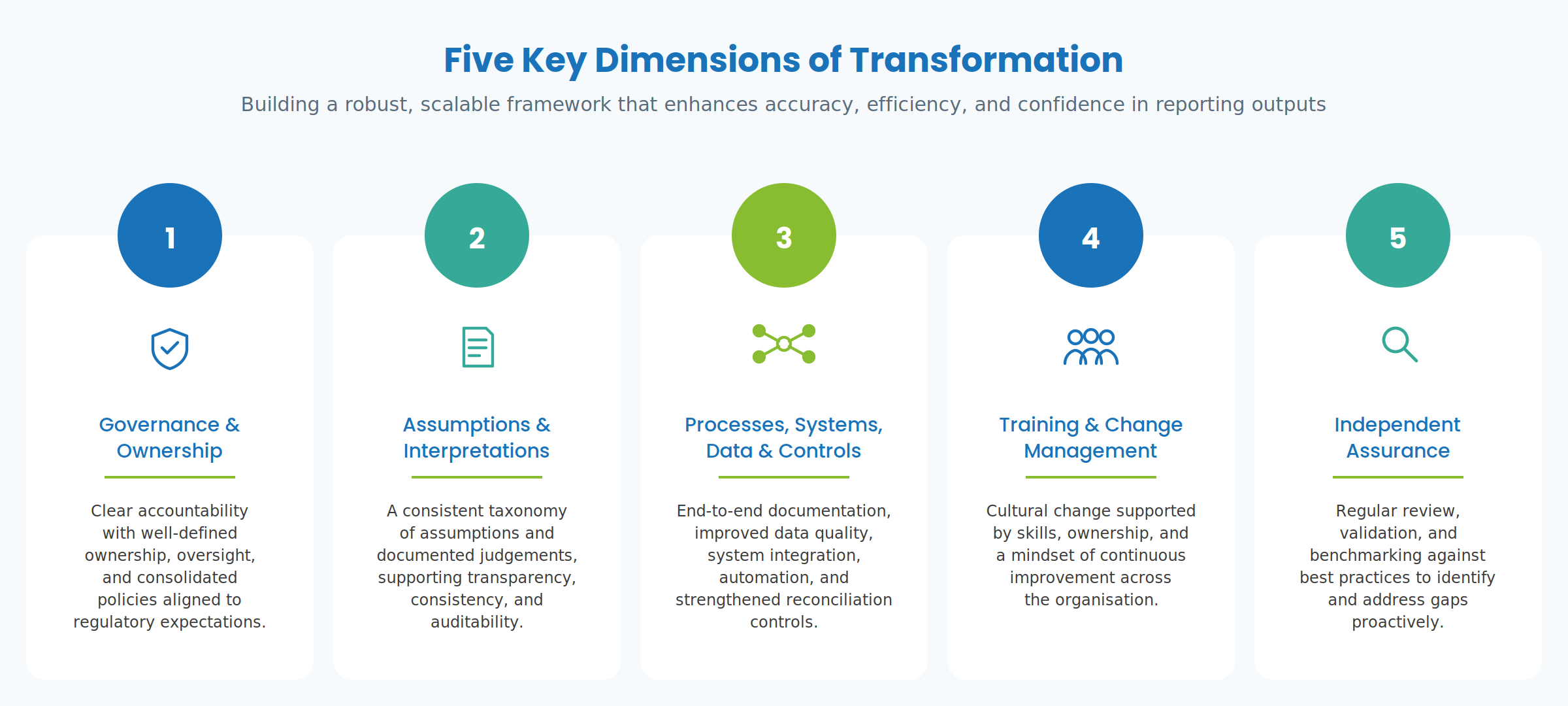
True regulatory reporting transformation goes beyond simply meeting minimum regulatory expectations. It involves building a robust, scalable framework that enhances accuracy, efficiency, and confidence in reporting outputs. At its core, transformation spans several key dimensions:
1. Governance and Ownership
Establishing clear accountability is fundamental. Firms need well-defined governance structures, with ownership of regulatory reporting clearly assigned and supported by appropriate oversight and independent assurance. Policies should be consolidated, regularly reviewed, and aligned with regulatory expectations.
2. Assumptions and Interpretations
A common weakness across firms is the lack of formal documentation around regulatory interpretations and judgements. Banks should develop a consistent taxonomy of assumptions and clearly document how rules are applied across their products and portfolios. This not only improves transparency but also supports consistency and auditability.
3. Processes, Systems, Data, and Controls
End-to-end documentation of reporting workflows is essential. Firms should focus on improving data quality, enhancing system integration, and increasing automation to reduce reliance on manual processes. Strengthened controls, including automated validation and reconciliation checks, are critical to minimising errors and ensuring reliability.
4. Training and Change Management
Transformation is not purely technical: it requires cultural change. Firms must equip their teams with the skills to operate new processes and systems, while also fostering a mindset of continuous improvement and ownership.
5. Independent Assurance
Introducing independent review helps ensure the integrity of documented policies, assumptions and interpretations, and the regulatory returns themselves. Regular testing, validation, and benchmarking against best practices are all key to identifying and addressing gaps and weaknesses proactively.
The Benefits of Transformation
Banks that take a strategic approach to regulatory reporting transformation can realise significant benefits:
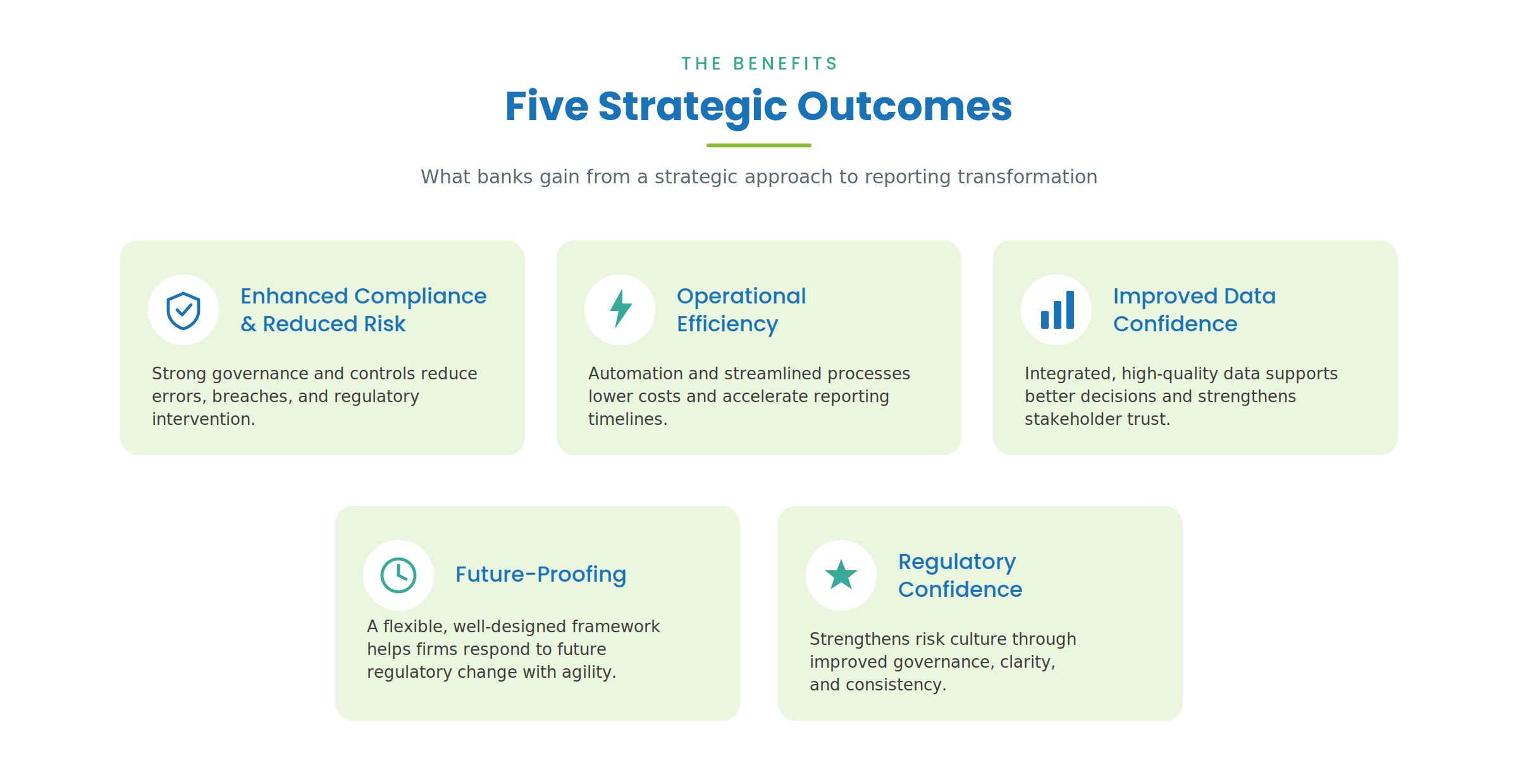
Enhanced compliance and reduced risk: Strong governance and controls reduce the likelihood of errors, breaches, and regulatory intervention.
Operational efficiency: Automation and streamlined processes reduce manual effort, lower costs, and accelerate reporting timelines.
Improved data confidence: High-quality, integrated data supports better decision-making and strengthens trust.
Future-proofing: A flexible, well-designed framework enables firms to respond more effectively to future regulatory change.
Regulatory confidence: Enhances risk culture and reinforces regulatory confidence through improved governance, clarity, and consistency.
Seizing the Possibilities
For many banks, the investment required to implement Basel 3.1 or adopt the Simplified Capital Regime is significant. However, approaching this purely as a compliance or system automation exercise risks missing the broader opportunity.
Conclusion
Regulatory reporting is no longer just a back-office function – it is a critical component of a bank’s risk management and strategic decision-making framework. Basel 3.1 and the Simplified Capital Regime provide a rare window to address longstanding weaknesses and build a more resilient, efficient, and forward-looking reporting capability.
Firms that act decisively will not only meet regulatory expectations but also position themselves for sustainable growth and competitive advantage in an increasingly complex regulatory landscape.
How We Can Help
At Katalysys, we support banks in transforming their regulatory reporting frameworks – moving beyond compliance to deliver robust, efficient, and future-proofed capabilities. We work in partnership with small- and medium-sized firms to design and implement proportionate, practical solutions aligned to Basel 3.1 and the Simplified Capital Regime.
Our support spans the full regulatory reporting lifecycle, including:
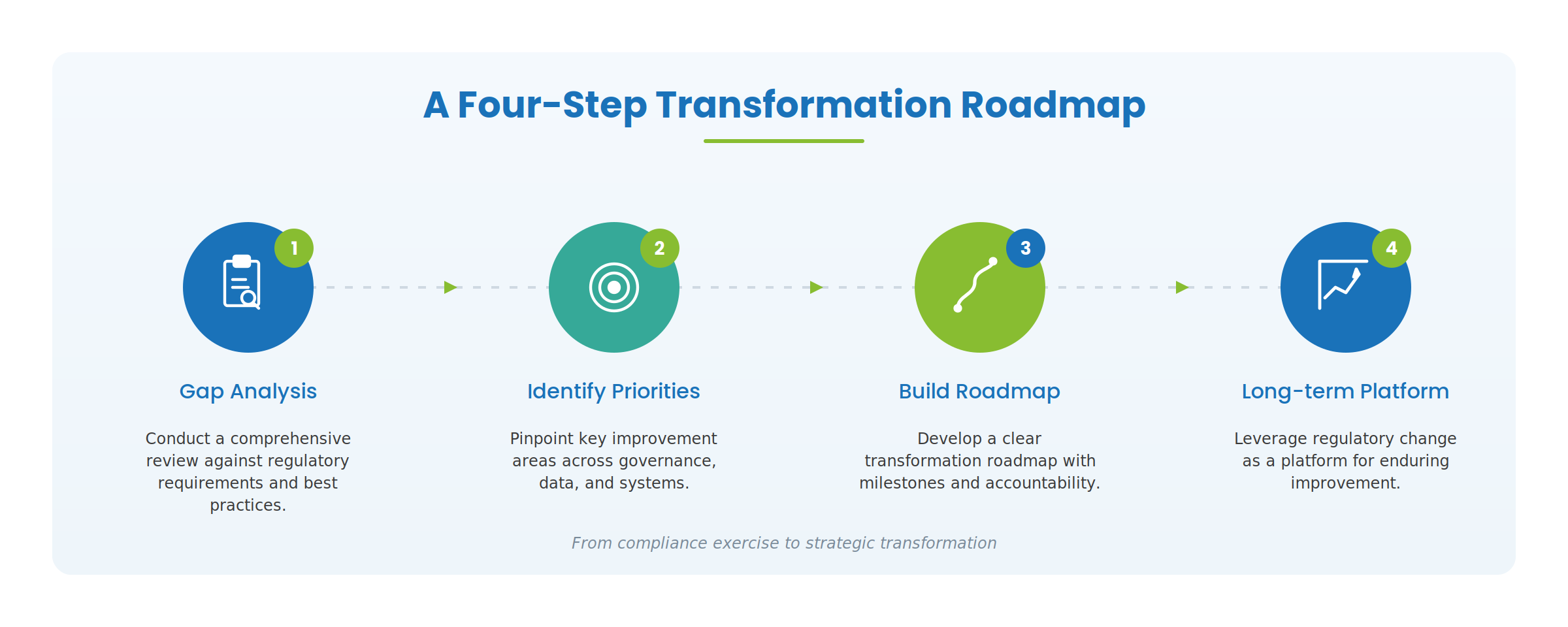
Regulatory gap analysis and remediation
Governance, policies, and operating model design
Assumptions, interpretations and judgements documents
Process, systems, and data enhancement
Controls and assurance
Training and change management
Independent review and benchmarking

Josh Nowak
Managing Director - Advisory & Solutions
T: +44 (0)7587 720 988
E: josh.nowak@katalysys.com